Have you ever looked at a symbol such as *—, …, , &, @, /, #, or ¶ and wondered, “What does this symbol mean in writing?”
You’re not alone. Written English contains dozens of punctuation marks, typographic characters, and special symbols. Some control grammar and sentence structure, while others shorten words, add emphasis, identify references, or communicate information without words.
The tricky part is that a symbol’s meaning can change depending on context. The same character may have one meaning in ordinary writing, another in mathematics, and another online or in programming. Unicode itself notes that the boundary between punctuation and symbols isn’t always absolute.
What does this symbol mean in writing?
In writing, a symbol is a character or mark that communicates meaning, structure, emphasis, or a specific instruction. Common examples include punctuation marks such as . , ? ! : ; — …, and special characters such as & @ # % * /. Its exact meaning depends on the symbol, sentence, and context.
Why do symbols matter in writing?
Symbols make written communication easier to understand.
When we speak, we can use pauses, changes in tone, facial expressions, and gestures to communicate meaning. Writing doesn’t have those advantages, so punctuation and other marks help readers understand how words relate to one another. Cambridge Dictionary describes punctuation as a way of making written language clearer in much the same way pauses and pitch help in speech.
For example:
- Let’s eat, Grandma. → You’re speaking to Grandma.
- Let’s eat Grandma. → Without the comma, the sentence has a very different meaning.
A tiny mark can completely change how a sentence is interpreted.
Symbol vs. punctuation mark: What’s the difference?
People often use the words symbol, character, and punctuation mark interchangeably, but they aren’t exactly the same.
Punctuation marks
Punctuation marks primarily organize written language.
Examples include:
- Period
. - Comma
, - Question mark
? - Exclamation mark
! - Colon
: - Semicolon
; - Parentheses
( ) - Quotation marks
" " - Apostrophe
' - Dash
— - Ellipsis
…
Symbols and special characters
Symbols often communicate an idea, quantity, relationship, or shortcut.
Examples include:
- Ampersand
&= and - Percent sign
%= percent - At sign
@= at - Dollar sign
$= dollars - Number sign
#= number or hashtag - Copyright sign
©= copyright - Trademark sign
™= trademark
However, the categories can overlap. Unicode explains that characters such as #, &, @, and % can be classified as punctuation even though they’re commonly used as symbols.
The important lesson: don’t determine a character’s meaning from its appearance alone. Look at how it’s being used.
Common symbols in writing and what they mean
Here’s a quick reference to some of the symbols you’re most likely to encounter.
| Symbol | Name | Common meaning or use |
|---|---|---|
. | Period / full stop | Ends a statement |
, | Comma | Separates words, phrases, or clauses |
? | Question mark | Indicates a direct question |
! | Exclamation mark | Shows strong emotion or emphasis |
: | Colon | Introduces an explanation, list, or example |
; | Semicolon | Connects closely related independent clauses |
' | Apostrophe | Shows possession or omitted letters |
" | Quotation marks | Indicates quoted speech or text |
() | Parentheses | Adds supplementary information |
[] | Square brackets | Adds editorial or contextual information |
- | Hyphen | Connects words or word parts |
– | En dash | Often indicates ranges or relationships |
— | Em dash | Creates a strong break or emphasis |
… | Ellipsis | Indicates omission or a trailing thought |
& | Ampersand | Means “and” |
@ | At sign | Means “at”; common in email and online mentions |
# | Number sign / hash | Number, label, or hashtag |
% | Percent sign | Percentage |
* | Asterisk | Footnote, note, correction, or special condition |
/ | Slash | Alternatives, separation, or certain technical uses |
_ | Underscore | File names, usernames, and technical contexts |
+ | Plus sign | Addition or “and” in some informal contexts |
= | Equals sign | Shows equality, especially in mathematics |
Unicode’s character charts also distinguish many of these characters by their standardized names and functions.
What does a period (.) mean in writing?
A period, called a full stop in British English, usually marks the end of a declarative sentence.
Example:
She finished her homework.
It can also appear in abbreviations, decimal numbers, website addresses, and other contexts.
Period vs. decimal point
The same-looking character can have different functions.
- Sentence: I went home.
- Number: 3.14
- Abbreviation: etc.
So the character’s meaning depends on context.
What does a comma (,) mean in writing?
A comma separates parts of a sentence and helps readers understand its structure.
Common uses
Commas can:
- Separate items in a list.
- Set off introductory phrases.
- Separate certain clauses.
- Set off nonessential information.
- Directly address someone.
Example:
After dinner, we went for a walk.
Another example:
Sarah, my sister, lives in London.
Comma rules can vary somewhat between style guides. For example, the OECD Style Guide notes that its English usage generally avoids the Oxford comma unless it is needed for clarity.
What does a question mark (?) mean?
The question mark indicates a direct question.
Examples:
Where are you going?
Did you finish the report?
It isn’t normally used after every sentence that expresses uncertainty. A rhetorical question, direct question, and indirect question can follow different punctuation conventions.
Compare:
Where is she?
I wonder where she is.
The second sentence is not a direct question, so it ends with a period.
What does an exclamation mark (!) mean?
An exclamation mark expresses strong emotion, emphasis, surprise, excitement, anger, or urgency.
Examples:
Watch out!
That’s amazing!
In casual texting, multiple exclamation marks can intensify emotion:
Really!!!
However, excessive use can make professional writing look informal or overly emotional. Good writing usually uses the mark deliberately.
What does a colon (:) mean in writing?
A colon often tells the reader that something important is about to follow.
It can introduce:
- A list
- An explanation
- An example
- A quotation
- A clarification
Example:
She brought three things: a notebook, a pen, and a laptop.
It can also introduce an explanation:
There was one problem: nobody had the key.
The material before the colon generally needs to form a suitable grammatical unit. Utah Valley University’s writing guidance, for example, explains that colons can introduce a word, phrase, clause, or list after an independent clause.
What does a semicolon (;) mean?
A semicolon connects closely related ideas that could often stand as separate sentences.
Example:
I wanted to go outside; it started raining.
The two parts are closely connected.
A semicolon can also separate items in a complicated list when those items already contain commas.
Example:
The conference included speakers from Paris, France; Rome, Italy; and Madrid, Spain.
What does an apostrophe (‘) mean?
The apostrophe has two major jobs in English:
- Showing possession
- Showing omitted letters in contractions
Possession
Sarah’s phone
The student’s book
Contractions
do not → don’t
cannot → can’t
it is → it’s
One common mistake is confusing it’s with its.
- It’s = it is / it has
- Its = possessive form
The OECD Style Guide also distinguishes apostrophes used for possession from those used to indicate omitted letters in contractions.
What do quotation marks (” “) mean?
Quotation marks usually identify words that are being quoted directly.
Example:
She said, “I’ll call you tomorrow.”
They can also be used for titles, terms, or words being discussed, depending on the applicable style guide.
Double vs. single quotation marks
English-language conventions differ between style systems and regions.
For example, double quotation marks are common in American English, while single quotation marks are often used for primary quotations in British publishing styles.
The important point is consistency.
What do parentheses ( ) mean?
Parentheses add information that is useful but not essential to the main sentence.
Example:
The meeting starts at 9 a.m. (although some employees arrive earlier).
If you remove the parenthetical information, the main sentence should generally remain understandable.
What do square brackets [ ] mean?
Square brackets often add information inside quoted material or provide editorial clarification.
Example:
“She [the manager] approved the request.”
They can also appear in technical writing, academic references, mathematics, programming, and other specialized fields.
This is a good example of why context matters: brackets in a novel may serve a different purpose from brackets in a mathematical expression or computer code.
What does a hyphen (-) mean?
A hyphen is primarily used to connect words or parts of words.
Examples:
- well-known
- part-time
- user-friendly
- twenty-one
One of the most common punctuation mistakes is confusing a hyphen with a dash.
They’re not interchangeable.
What does an en dash (–) mean?
The en dash is longer than a hyphen and shorter than an em dash.
It’s commonly used for ranges:
pages 10–20
2020–2026
It can also express relationships or connections:
the London–Paris route
Different style guides have different rules about spaces and specific uses, so follow the style guide required for your publication.
What does an em dash (—) mean?
The em dash creates a strong break in a sentence.
It can:
- Add emphasis.
- Introduce an explanation.
- Set off additional information.
- Indicate an interruption.
- Create a dramatic shift.
Example:
I had one thought—leave immediately.
Or:
She opened the door—and froze.
The em dash is stronger than an ordinary comma and can often replace parentheses or a colon depending on the sentence.
Hyphen vs. en dash vs. em dash
| Mark | Name | Typical function |
|---|---|---|
- | Hyphen | Joins words |
– | En dash | Ranges and relationships |
— | Em dash | Strong break or emphasis |
Don’t treat these three marks as identical.
What does an ellipsis (…) mean?
An ellipsis consists of three dots and can indicate omitted material or a sentence that trails off.
Example of omission:
The study found that “participants … reported improved results.”
Example of a trailing thought:
I thought you were going to…
It can also suggest hesitation in informal writing:
Well… I’m not sure.
However, ellipses shouldn’t be scattered throughout formal writing simply to create dramatic pauses. Style guides can differ on spacing and specific applications. The OECD Style Guide, for example, advises against using an ellipsis merely to indicate a pause or as a substitute for “etc.”
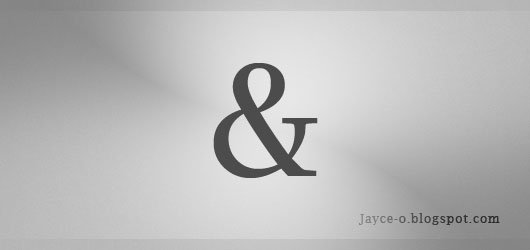
What does an ampersand (&) mean?
The ampersand means “and.”
Example:
Johnson & Johnson
It’s commonly used in:
- Company names
- Official titles
- Certain abbreviations
- Informal design or headings
In ordinary formal prose, writing and is usually preferable.
For example:
Better in normal prose:
Research and development is important.
Common abbreviation:
R&D
The OECD Style Guide specifically recommends using the ampersand when it belongs to an official name, title, or established abbreviation rather than routinely replacing “and” in regular prose.
What does the @ symbol mean in writing?
The @ symbol is called the at sign.
Its traditional meaning is “at.”
Example:
10 items @ $5 each
Today, it’s especially familiar because of email addresses:
It’s also widely used for social media mentions:
@username
Unicode identifies @ as the commercial at sign and notes that characters such as @ can function as punctuation or symbols depending on context.
What does the # symbol mean in writing?
The # symbol has several names and meanings.
It can mean:
- Number
- Hash
- Hashtag
Number
#5
In some contexts, this means “number 5.”
Hashtag
#WritingTips
On social media, the symbol creates or identifies a hashtag.
Technical uses
The same character has additional meanings in programming, computing, music, mathematics, and other specialized fields.
This is another reason the surrounding context matters.
What does the asterisk (*) mean in writing?
The asterisk is often used to point readers toward additional information.
For example:
Free delivery*
Then a note might appear below:
*Terms and conditions apply.
It can also indicate:
- Footnotes
- Corrections
- Omissions
- Special conditions
- Censored words
- Certain formatting conventions
In informal digital communication, people sometimes use asterisks for emphasis:
That was really unexpected.
Its exact function depends heavily on the medium.
What does the slash (/) mean in writing?
The slash can indicate alternatives, separation, fractions, or technical relationships.
Examples:
and/or
yes/no
3/4
2026/2027
It’s common online and in forms, but excessive use can make prose harder to read.
Instead of:
Students must bring a notebook and/or laptop.
Clearer prose may be:
Students must bring a notebook, a laptop, or both.
The best choice depends on the intended meaning and level of formality.
What does the underscore (_) mean?
The underscore is a low horizontal line.
It’s especially common in:
- Usernames
- File names
- Computer systems
- Programming
- Search-friendly URLs
Examples:
john_smith
annual_report_2026
It doesn’t usually have a major role in ordinary English prose.
What does the percent sign (%) mean?
The percent sign means “percent.”
Example:
Sales increased by 15%.
It is commonly used with numerical values.
In ordinary prose, some style guides prefer spelling out percent, particularly when the number is written as a word. Always follow the style requirements of your publication or institution.
What does the dollar sign ($) mean?
The dollar sign identifies a monetary amount expressed in dollars.
Example:
$50
The exact currency and formatting conventions can depend on the country and context.
Other currencies have their own signs, such as:
£= pound€= euro¥= yen/yuan depending on context₹= Indian rupee₩= Korean won
Unicode’s character charts contain standardized names for many currency and other symbol characters.
What does the vertical line (|) mean?
The vertical bar, or pipe, has several specialized uses.
In ordinary writing, you may see it as a separator:
Name | Date | Status
In mathematics, programming, linguistics, and technical notation, it can have much more specific meanings.
Unicode notes, for example, that the vertical line can be used as a separator and in paired form for absolute value in some mathematical contexts.
What does the caret (^) mean?
The caret or related upward-pointing characters have several uses.
In editing, a caret can indicate where something should be inserted.
In computing, it can represent an operation or special instruction depending on the programming language.
In mathematics and plain-text notation, ^ is often used to represent exponentiation:
2^3 = 8
But the precise interpretation depends on the context.
What does the tilde (~) mean?
The tilde can have different meanings in different fields.
It may indicate:
- Approximation
- Similarity
- A range or informal approximation
- A special mathematical relationship
- A technical command
For example:
~100 people
usually means approximately 100 people.
Unicode identifies ~ as the tilde and lists numerous related characters with specialized functions.
What does the paragraph symbol (¶) mean?
The pilcrow, or paragraph mark, is written as ¶.
It’s used to identify a paragraph, particularly in proofreading, editing, typography, and word-processing software.
You may encounter it when formatting marks are turned on in a word processor.
It doesn’t normally appear in polished everyday prose.
What does the section symbol (§) mean?
The section sign is written as §.
It’s commonly used to refer to a particular section of a document, especially in legal and academic contexts.
Example:
See § 12 for additional information.
It can also be written as §§ when referring to multiple sections.
Why does the same symbol have different meanings?
This is one of the most important things to understand.
Symbols don’t always have one universal meaning.
Unicode explicitly explains that the classification and function of a character can depend on context. For instance, ! may be punctuation in ordinary writing but an operator in a mathematical or technical expression.
Consider the slash:
/
It can mean:
- “or” in some writing
- division in mathematics
- a path separator in computing
- part of a web address
- a date separator
The character hasn’t changed.
The context has changed.
Symbols in formal vs. informal writing
A symbol that’s perfectly normal in a text message may be inappropriate in a formal report.
Informal writing
You might write:
What are you doing??? 😂
Or:
Okay… I guess.
Formal writing
You’d normally write:
What are you doing?
Or:
I am not certain.
Formal writing generally benefits from consistency, precision, and restrained punctuation. The OECD Style Guide recommends using punctuation thoughtfully and matching punctuation choices to tone and style.
Symbols in texting and social media
Digital communication has expanded the role of symbols.
A punctuation mark can communicate emotion in ways that aren’t obvious from traditional grammar.
For example:
Okay.
may sound neutral or even cold in some conversations.
But:
Okay!
can sound enthusiastic.
And:
Okay…
may suggest hesitation, disappointment, uncertainty, or reluctance depending on the relationship and conversation.
Similarly:
What?
WHAT?!
What…
All three contain essentially the same word, but the punctuation changes the perceived tone.
Important point
These emotional interpretations aren’t fixed grammatical rules.
They’re contextual communication cues.
The sender’s personality, relationship with the reader, platform, and previous conversation can all affect interpretation.
Symbols in academic writing
Academic writing generally values precision over decoration.
Commonly encountered symbols include:
%for percentages*for notes or statistical significance§for sections()for supplementary information[]for editorial additions—for certain sentence structures- mathematical operators where appropriate
Always follow the style guide required by your school, journal, publisher, or field.
Symbols in business writing
Business writing should be especially clear because ambiguity can cause misunderstandings.
Good practice
Use symbols when they are:
- Standard
- Familiar to your audience
- Part of an official name
- Necessary for technical accuracy
- Clearly understood in the context
Avoid unnecessary symbols when:
- They make a sentence harder to read.
- You’re replacing ordinary words simply to look modern.
- Your audience may misunderstand them.
- You’re writing formal prose.
For example, an ampersand may be appropriate in a company name but unnecessary in an ordinary sentence.
Symbols in literature and creative writing
Creative writers often use punctuation more deliberately than technical writers.
A writer might use an em dash to create interruption:
“I thought you—”
Or an ellipsis to suggest hesitation:
“I don’t know… maybe.”
A novel can also use recurring objects, images, colors, or marks as literary symbols.
This is different from punctuation.
For example, a rose may symbolically represent love in a story. That’s literary symbolism, not a punctuation mark.
What is the difference between a symbol and symbolism?
This distinction is important.
Symbol
A symbol is a character, mark, image, object, or sign that represents something.
Examples:
&represents “and.”%represents “percent.”@represents “at” in certain contexts.
Symbolism
Symbolism is the use of something to represent a deeper idea.
For example, in literature:
- A dove may symbolize peace.
- Darkness may symbolize fear or uncertainty.
- A journey may symbolize personal growth.
So when someone asks “What does this symbol mean in writing?”, they may actually be asking one of two different questions:
- What is this punctuation mark or character used for?
- What does this object or image symbolize?
The answer depends on what they’re looking at.
How to identify an unknown symbol
If you don’t recognize a symbol, don’t guess immediately.
Use this simple process.
Step 1: Look at its shape
Is it:
- A dot?
- A line?
- A pair of brackets?
- A star?
- A circle?
- A cross?
- A quotation mark?
Step 2: Check where it appears
Ask:
- Is it inside a sentence?
- Before a number?
- After a word?
- At the beginning of a line?
- In an email address?
- In a mathematical equation?
- In a text message?
- In computer code?
Step 3: Read the surrounding words
Context often reveals the meaning.
Step 4: Check the type of writing
A symbol in:
- A novel
- A legal document
- A math textbook
- A medical document
- A social media post
- A computer program
may have completely different meanings.
Step 5: Identify the symbol’s name
Once you know the name, it’s much easier to learn its rules.
For example:
&→ ampersand
…→ ellipsis
—→ em dash
¶→ pilcrow
Common symbol mistakes in writing
Even experienced writers occasionally confuse symbols.
1. Confusing a hyphen with an em dash
Incorrectly treating these as interchangeable can create formatting and meaning problems.
Remember:
Hyphen: -
En dash: –
Em dash: —
2. Using apostrophes for ordinary plurals
Incorrect:
Apple’s are expensive.
Correct:
Apples are expensive.
The apostrophe isn’t normally used simply to make a regular plural.
3. Confusing its and it’s
Incorrect:
The company changed it’s policy.
Correct:
The company changed its policy.
Remember:
it’s = it is / it has
its = possessive
4. Overusing exclamation marks
A sentence like:
This is incredible!!!!!
may work in a casual message, but it can look unprofessional in a business report.
5. Overusing slashes
Writing:
and/or
is sometimes useful, but repeatedly replacing ordinary words with slashes can reduce readability.
6. Using symbols without considering the audience
A technical abbreviation or symbol may be obvious to specialists but confusing to beginners.
Good writing considers who will read it.
Are punctuation marks symbols?
Yes, in the broad everyday sense, punctuation marks can be considered symbols used in writing. However, technical classifications distinguish punctuation from symbols, and the boundary isn’t always absolute. Unicode specifically notes that some characters can function as either punctuation or symbols depending on context.
So if someone calls a comma a “writing symbol,” they’re understandable, even though punctuation mark is the more precise term.
What is the most important punctuation mark?
There isn’t one punctuation mark that’s universally “most important.”
Different marks perform different jobs.
- Period: ends statements.
- Comma: organizes sentence elements.
- Question mark: identifies direct questions.
- Exclamation mark: expresses strong emotion.
- Colon: introduces information.
- Semicolon: connects related independent clauses.
- Dash: creates a strong break or emphasis.
- Quotation marks: identify quoted material.
- Apostrophe: handles possession and contractions.
Good writing isn’t about using more punctuation.
It’s about using the right mark for the intended meaning.
Quick guide: What does each common symbol mean?
| Symbol | Simple meaning |
|---|---|
. | End of a statement |
, | Separation or pause |
? | Question |
! | Strong emotion or emphasis |
: | Introduction or explanation |
; | Closely related ideas |
' | Possession or contraction |
" | Quotation |
( ) | Extra information |
[ ] | Added/editorial information |
- | Joins words |
– | Range or relationship |
— | Strong break or emphasis |
… | Omission or trailing thought |
& | And |
@ | At |
# | Number, hash, or hashtag |
% | Percent |
* | Note or special condition |
/ | Alternative or separator |
_ | Underscore |
¶ | Paragraph mark |
§ | Section |
The biggest lesson: context determines meaning
If there’s one thing to remember from this guide, it’s this:
A symbol doesn’t always have one fixed meaning.
The character # can mean “number” or function as a hashtag.
The character / can represent an alternative, a fraction, a date separator, or something technical.
The character ! can be an exclamation mark in ordinary writing but have a different function in mathematics or programming.
Even Unicode’s formal classification recognizes that character categories and functions can vary by context.
That’s why the best way to answer “What does this symbol mean in writing?” is to examine the symbol and the sentence or environment where it appears.
Frequently Asked Questions
What does a symbol mean in writing?
A symbol is a mark or character used to communicate meaning, structure, emphasis, or information. Some are punctuation marks, while others are special characters used in writing, mathematics, technology, business, or digital communication.
What are the most common symbols in English writing?
Common examples include the period ., comma ,, question mark ?, exclamation mark !, colon :, semicolon ;, apostrophe ', quotation marks " ", ampersand &, at sign @, number sign #, asterisk *, slash /, and percent sign %.
What does an asterisk mean in writing?
An asterisk * commonly points to a footnote, clarification, special condition, correction, or additional information. Its meaning can change in digital, mathematical, or technical contexts.
What does an ellipsis mean in writing?
An ellipsis … can indicate omitted words or a thought that trails off. In informal communication, it can also suggest hesitation or an unfinished thought.
What does an em dash mean in writing?
An em dash — creates a strong break in a sentence. It can add emphasis, introduce additional information, indicate an interruption, or separate a phrase from the main sentence.
What does the ampersand mean?
The ampersand & means “and.” It’s common in company names, titles, abbreviations, and informal contexts. In ordinary formal prose, spelling out “and” is generally preferable.
What does @ mean in writing?
The @ symbol means “at” in some traditional uses and is widely used in email addresses and online mentions.
What does # mean in writing?
The # symbol can mean “number” and is also used to create hashtags on social media. Its exact meaning depends on context.
What does ¶ mean?
The ¶ symbol is called the pilcrow or paragraph mark. It is mainly used in editing, proofreading, typography, and word-processing environments.
What does § mean?
The § symbol is called the section sign. It is commonly used to refer to sections of legal, academic, or other formal documents.
Is punctuation the same as a symbol?
Not exactly. Punctuation marks primarily organize written language, while symbols often represent concepts or information. However, the categories can overlap, and Unicode recognizes that some characters function as both punctuation and symbols.
Why do symbols have different meanings?
Symbols can have different meanings because conventions change between contexts. A character may function differently in ordinary English, mathematics, programming, texting, legal writing, or another specialized field.
How can I find out what an unknown symbol means?
Identify its shape, look at where it appears, read the surrounding text, determine the type of document or platform, and then identify the symbol’s standard name. Context is often the fastest way to determine its meaning.
Final takeaway
When you see an unfamiliar mark and ask, “What does this symbol mean in writing?”, don’t assume there’s only one answer.
A symbol’s meaning comes from its name, function, surrounding words, writing style, and context.
Punctuation helps organize sentences. Special characters can shorten ideas or provide information. And in digital communication, even a simple period, dash, or ellipsis can influence how a message feels.
Once you understand the most common marks—and the difference between a hyphen, en dash, em dash, apostrophe, quotation mark, ellipsis, and other special characters—unfamiliar writing becomes much easier to read and interpret.
Good writing isn’t about filling every sentence with symbols.
It’s about choosing the right mark when the reader needs it.
descover more post
What Does the Infinity Symbol Mean ∞ Meaning History …
What Does the Symbol Mean in Yellowjackets Theories …
What Does the Berserk Symbol Mean The Brand of …

Luna Dream is a dream enthusiast and writer dedicated to exploring the meanings, symbols, and stories behind dreams. Through DreamETrue, she shares thoughtful and easy-to-understand insights to help readers discover the fascinating world of dreams.