Spoiler warning: This article discusses major plot points from Yellowjackets Seasons 1–3, including the identity of Pit Girl and the Antler Queen.
If you’ve watched Yellowjackets, you’ve probably noticed the strange symbol carved into trees, floors, maps, objects, and even appearing in the survivors’ lives decades after the plane crash. It looks simple at first, but the more often it appears, the more disturbing it becomes.
So, what does the symbol mean in Yellowjackets?
The frustrating—and fascinating—answer is that the series still hasn’t officially explained its original meaning. However, the symbol has become closely associated with the Wilderness, survival, sacrifice, death, fear, and the survivors’ increasingly complicated belief that something in the forest may have been watching them.
Season 3 gave viewers major answers about the show’s mythology, including the identities of Pit Girl and the Antler Queen, but the symbol itself remains one of Yellowjackets’ biggest unresolved mysteries.
The good news is that its repeated appearances give us plenty of clues.
What Does the Yellowjackets Symbol Mean?
The Yellowjackets symbol does not yet have a confirmed canonical meaning. The mysterious glyph appears to be connected to the Wilderness and the survivors’ rituals, but the show has never definitively explained who originally created it or what it was intended to represent.
Several interpretations have emerged, including a warning, a marker of danger, a symbol of sacrifice, a representation of the Wilderness, a map or geographic marker, and a sign of protection.
The symbol’s meaning may also change depending on who is using it. Lottie, Taissa, the survivors as a group, and the mysterious people connected to the Wilderness don’t necessarily appear to understand it in exactly the same way.
That ambiguity is intentional. Yellowjackets repeatedly asks whether the Wilderness is genuinely supernatural or whether traumatized people are giving meaning to frightening events they can’t explain.
Quick answer: The Yellowjackets symbol is an unexplained glyph associated with the Wilderness, survival, sacrifice, and the survivors’ rituals. As of the end of Season 3, its original creator and exact meaning remain unknown.
What Does the Yellowjackets Symbol Look Like?
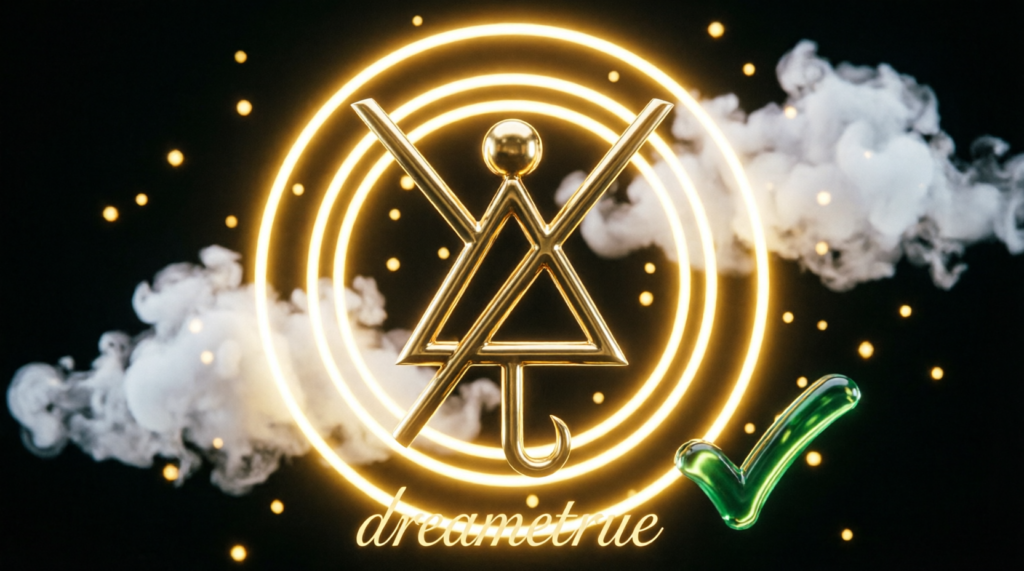
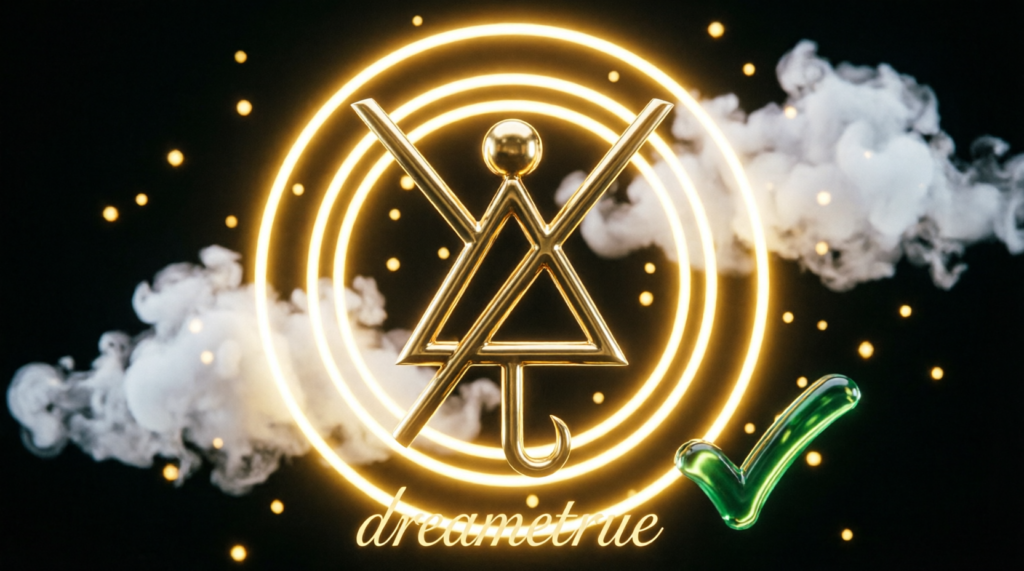
The symbol is a stylized line drawing that roughly resembles a human or human-like figure suspended from a hook.
Its major visual components include:
- A circular shape near the top
- A triangular or body-like central section
- Lines crossing through the middle
- A curved hook-like shape at the bottom
- A highly simplified, almost diagrammatic appearance
Because of its unusual design, viewers have interpreted the figure in several different ways.
Some see a person hanging upside down.
Others see a body caught in a pit trap.
Some fans interpret it as a map, a warning sign, or a symbolic representation of the Wilderness itself.
The show has never confirmed that any one visual interpretation is correct.
Where Does the Symbol First Appear in Yellowjackets?
One of the biggest clues is that the symbol appears to predate the Yellowjackets’ arrival in the wilderness.
After the plane crash, the survivors discover the marking carved into a tree. They later find it inside the abandoned cabin, including on the attic floor near the remains of the cabin’s former occupant.
This creates an important problem for one popular theory.
If the symbol represents the girls’ later cannibalistic rituals, why was it already present before they developed those rituals?
That question is one reason the symbol remains so difficult to decode.
Yellowjackets Symbol Explained: Where Have We Seen It?
The symbol has appeared in both the 1996 wilderness timeline and the present-day survivor timeline.
| Location or object | What it suggests |
|---|---|
| Tree near the crash site | The symbol existed before the team fully understood it |
| Abandoned cabin | Connection to the previous inhabitant and the wilderness |
| Cabin attic | Possible connection to death and danger |
| Lottie’s objects and rituals | Spiritual or protective interpretation |
| Taissa’s shrine | Violence, sacrifice, and ritual |
| Travis’s death scene | Possible connection to ritual and the Wilderness |
| Postcards | Connection between the past and present |
| Pendants worn by Lottie’s followers | Group identity and belief |
| Sand and large-scale markings | A broader territorial or communal meaning |
| Season 3 package sent to Shauna | The mystery continues beyond the original wilderness timeline |
The symbol’s recurrence is significant because it isn’t limited to one person or one location.
Is the Yellowjackets Symbol Evil?
The show hasn’t established that the symbol itself is evil.
This distinction matters.
Characters frequently associate the marking with frightening events, but the series deliberately complicates the idea that the symbol represents pure evil.
Lottie, in particular, has argued that something being mysterious doesn’t automatically make it evil. The symbol can appear around death and violence while also becoming associated with protection, hope, survival, and community.
That contradiction is one of the most interesting aspects of the symbol.
It may represent something dangerous.
It may represent something protective.
Or it may simply be a human-made symbol that the survivors gradually loaded with supernatural meaning.
Yellowjackets keeps all three possibilities alive.
The Biggest Yellowjackets Symbol Theories
There isn’t one confirmed explanation, but several theories have become especially important to understanding the mystery.
1. The Symbol Represents Human Sacrifice
This is probably the most famous theory.
The shape can be interpreted as a person hanging upside down, while the lines across the central body resemble spikes or the structure of a trap.
That interpretation connects the symbol to one of the show’s most disturbing recurring images: a person being hunted, captured, killed, and prepared as food.
The theory became even more compelling because the show’s opening sequence depicts a girl falling into a spiked pit before eventually being hung upside down.
However, there is a major problem.
The symbol was already present in the wilderness before the events surrounding Pit Girl occurred.
So the symbol cannot simply be a literal drawing of Pit Girl unless the story eventually establishes that the Wilderness operates outside normal time—or that the symbol represents a ritual that existed before its later victim.
That is why the theory is compelling but not proven.
Why the sacrifice theory makes sense
The theory fits several recurring themes:
- blood sacrifice
- hunting
- ritual
- cannibalism
- death
- hanging
- the pit
- the Wilderness
- the Antler Queen
- the survivors’ transformation
But a visual resemblance isn’t the same thing as canon.
Verdict: Strong thematic theory, but not officially confirmed.
2. The Symbol Is a Warning
Another interpretation is that the marking functions like a warning sign.
The symbol appears around dangerous places and situations, leading some viewers to interpret it as a message saying, essentially:
Don’t go here.
That would make the symbol less of a supernatural emblem and more of a practical marking left by someone who knew the area.
This theory is especially interesting because the wilderness contains hidden dangers that the Yellowjackets don’t initially understand.
If the symbol marked hazardous locations, underground areas, traps, or dangerous territory, it could explain why it appears repeatedly without requiring supernatural intervention.
Verdict: Plausible, especially if the symbol ultimately proves to have a practical origin.
3. The Symbol Is a Map or Geographic Marker
One of the most persistent fan theories is that the symbol contains geographic information.
Some viewers have tried to interpret its lines and shapes as:
- a map
- a compass
- a location marker
- coordinates
- a route
- a warning about terrain
- an escape clue
The idea became popular partly because the show has repeatedly emphasized navigation, maps, geography, and the characters’ inability to understand exactly where they are.
The theory also fits Yellowjackets’ habit of hiding practical information inside apparently symbolic details.
However, no official source has confirmed that the symbol is a mathematical equation or a navigational map.
Verdict: Interesting and visually plausible, but currently unconfirmed.
4. The Symbol Is a Form of Hobo Code
Another popular theory compares the marking to hobo code, a system of symbols historically associated with itinerant people and used to communicate information about locations, hazards, or people.
Under this interpretation, the Yellowjackets symbol could potentially communicate something practical to someone traveling through the wilderness.
The problem is that the show has not established that its symbol is actually part of a historical hobo-code system.
In other words, this is a fan interpretation—not established lore.
Verdict: A clever theory, but there’s no confirmed connection.
5. The Symbol Represents the Wilderness
This may be the most useful symbolic interpretation even if it isn’t the literal answer.
Throughout the series, the Wilderness becomes more than a physical location.
For the survivors, it becomes a psychological and spiritual force.
The symbol may therefore represent:
- the place where they changed
- their shared trauma
- the rules they created
- the violence they committed
- the things they believe happened there
- the identity they developed in the wilderness
This interpretation explains why the symbol continues appearing in the present-day timeline.
The survivors left the forest.
But psychologically, the forest never completely left them.
The Symbol as a Representation of Trauma
This is where Yellowjackets becomes more psychologically interesting.
The adult survivors have spent decades trying to live normal lives. Yet the events of 1996 repeatedly return through memories, relationships, rituals, secrets, guilt, and fear.
The symbol works almost like a visual scar.
It represents something they cannot fully explain and cannot fully escape.
From this perspective, the question isn’t simply:
“What does the symbol mean?”
It’s also:
“What does the symbol mean to each survivor?”
Those are two very different questions.
Does Lottie Know What the Symbol Means?
Lottie appears to attach a powerful spiritual meaning to the symbol, but that doesn’t necessarily mean she knows its original purpose.
She interprets the Wilderness through visions, intuition, rituals, and belief.
At different points, the symbol becomes associated with protection, sacrifice, and the mysterious force she believes exists around the survivors.
However, the series doesn’t establish that Lottie created the original symbol or that she knows who first carved it.
That’s an important distinction.
Lottie may understand what the symbol means to her without knowing what it originally meant.
Is the Symbol Connected to Lottie’s Cult?
Yes, the symbol becomes strongly associated with Lottie’s community in the present-day storyline.
Members of her intentional community wear pendants featuring the marking. The symbol also appears in connection with the group’s rituals and environment.
That gives the marking a new function.
It becomes a kind of shared identity.
The people who believe in Lottie’s worldview use it to identify themselves with the experiences and beliefs that grew out of the wilderness.
But this doesn’t prove Lottie created the symbol.
In fact, the fact that the symbol existed before the crash is one of the biggest clues that its history is deeper than Lottie’s adult community.
Is the Symbol Connected to Taissa?
Taissa has one of the strongest relationships with the symbol.
Her connection is particularly disturbing because of the behavior of her alternate or dissociative state, often referred to by fans as Other Tai.
The symbol appears in connection with Taissa’s actions, including the disturbing shrine in her basement.
It also appears on Simone’s hand after the car accident, where Taissa initially describes it as being “for luck.”
That moment is important because it introduces another interpretation of the symbol:
protection.
The same image that viewers associate with death and ritual may also function as a protective sign for Taissa.
That contradiction fits the show’s larger theme: the characters aren’t sure whether the Wilderness is helping them, harming them, or whether their own minds are creating the connection.
Is the Symbol Connected to Travis?
The symbol is also connected to Travis’s death.
Misty and Natalie discover that wax beneath Travis’s suspended body forms a pattern resembling the same symbol.
This makes the marking appear to be connected to ritualistic behavior.
But even here, the show leaves room for uncertainty.
Travis’s death is surrounded by conflicting explanations, and the series repeatedly asks viewers to distinguish between:
- what actually happened
- what the characters believe happened
- what they want to believe happened
- and what may have supernatural significance
That ambiguity is central to Yellowjackets.
Is the Yellowjackets Symbol Supernatural?
Maybe—but the show has deliberately avoided giving viewers a simple answer.
This is one of Yellowjackets’ defining mysteries.
There are two broad interpretations.
The supernatural interpretation
Under this reading:
- the Wilderness contains an actual supernatural force
- the symbol represents that force
- Lottie’s visions may be genuine
- the Wilderness can influence events
- the symbol could be a supernatural warning or ritual marker
The psychological interpretation
Under this reading:
- trauma changes how the survivors perceive events
- starvation and fear distort judgment
- dissociation affects behavior
- the survivors create rituals to regain control
- the symbol becomes meaningful because they believe it is meaningful
The show deliberately allows both interpretations to coexist.
Co-showrunner Jonathan Lisco has described this larger question as part of the series’ central tension: whether apparently supernatural experiences have an external explanation or whether something genuinely strange is happening.
What Did Season 3 Reveal About the Symbol?
Season 3 was important because the show finally answered several major questions that had been connected to the larger mystery.
Most notably, the finale confirmed that:
- Mari is Pit Girl
- Shauna becomes the Antler Queen
- the survivors’ descent into ritualized violence continues
- the story’s past and present remain deeply connected
The symbol itself, however, was not definitively explained.
That distinction is crucial.
Season 3 answered questions about the people and rituals surrounding the Wilderness, but the original purpose and creator of the symbol remain unresolved.
The Symbol in Season 3
The marking appears less frequently in Season 3 than it did in the earlier seasons, but it doesn’t disappear completely.
It appears in the season’s present-day storyline on a package connected to Shauna.
It also appears in the wilderness timeline, including near the path taken by the biologists and wilderness guide.
That matters because the symbol continues to exist outside the immediate circle of the original Yellowjackets.
So the mystery is no longer simply:
“What did the girls turn the symbol into?”
It may also be:
“Who knew about the symbol before them?”
Did the Yellowjackets Create the Symbol?
No confirmed evidence says that they did.
This is one of the safest conclusions we can draw from what the show has shown.
The symbol appears in the wilderness before the girls have established their later rituals.
That makes it unlikely that the Yellowjackets invented it as a direct representation of their cannibalism.
The characters later adopt, reproduce, and reinterpret the symbol—but that’s different from creating it.
This distinction is essential when separating canon from fan theory.
Who Created the Yellowjackets Symbol?
The creator of the symbol inside the story has not been confirmed.
There is, however, an interesting behind-the-scenes answer.
Co-showrunner Bart Nickerson created the initial design, while Nickerson, Ashley Lyle, and Jonathan Lisco collaborated on the final version.
So there are two different questions:
| Question | Answer |
|---|---|
| Who designed it for the TV series? | Bart Nickerson developed the initial design collaboratively with the other creators |
| Who created it inside the story? | Still unknown |
| Does Lottie create the original symbol? | Not confirmed |
| Do the Yellowjackets create it? | Not established |
| Does the show confirm it is supernatural? | No |
| Does the show confirm it represents sacrifice? | No |
This is an important example of why production facts and story canon shouldn’t be confused.
Why Does the Symbol Keep Appearing?
The symbol’s repetition is one of the reasons fans believe it must matter.
It isn’t just carved into one tree and forgotten.
It appears across different places, objects, people, and timelines.
That repetition gives it several possible narrative functions.
1. It connects the timelines
The same marking exists in 1996 and decades later.
2. It connects different survivors
Lottie, Taissa, Natalie, Misty, Shauna, and others become connected to the symbol in different ways.
3. It connects survival with ritual
The symbol becomes increasingly associated with the rituals the survivors create.
4. It represents an unresolved mystery
The symbol reminds viewers that there are still things about the wilderness the characters—and audience—don’t understand.
5. It represents psychological inheritance
The survivors’ children and adult lives become entangled with the consequences of what happened in the forest.
What Does the Symbol Mean to the Yellowjackets?
There may not be a single answer because different characters appear to give it different meanings.
| Character/group | Possible meaning of the symbol |
|---|---|
| Lottie | Protection, spirituality, the Wilderness |
| Taissa / Other Tai | Luck, protection, ritual, hidden impulses |
| Natalie | Something connected to the wilderness and its mysteries |
| Misty | Evidence that needs to be investigated |
| Lottie’s followers | Shared belief and community |
| The survivors collectively | Trauma, survival, guilt, and the past |
| Viewers | A mystery whose meaning remains unresolved |
This is arguably the most important insight into the symbol.
Its meaning changes depending on who is looking at it.
Is the Yellowjackets Symbol a Rune?
Fans sometimes call it a rune, glyph, sigil, or occult symbol.
But there is an important difference between saying it looks like one of these things and saying it is one.
The series has not established that the marking is a historical rune from a known tradition.
Calling it a “rune” is therefore better understood as fan terminology rather than a confirmed classification.
Likewise, there is no confirmed evidence that it is a traditional occult sigil with a documented historical meaning.
Until the show identifies its origin, it’s safest to call it simply the Yellowjackets symbol or the mysterious symbol.
Is the Yellowjackets Symbol a Real Historical Symbol?
There is currently no established evidence that the show’s glyph is a recognized historical symbol with a single traditional meaning.
Its design can remind viewers of various symbols, codes, diagrams, and occult markings, which is part of what makes the mystery so effective.
But resemblance isn’t proof of origin.
The creators designed the symbol specifically for Yellowjackets, with Bart Nickerson developing its initial form and the creative team refining it together.
So it’s better not to claim that the symbol is definitively:
- a Norse rune
- a Celtic symbol
- an alchemical symbol
- a demonic sigil
- an ancient religious symbol
- or a historical hobo-code sign
unless the series itself eventually confirms that connection.
Why Fans Think the Symbol Represents Pit Girl
The Pit Girl theory deserves special attention because Season 3 changed how viewers look at it.
The symbol’s shape can be interpreted as:
- A circular head
- A triangular body
- Lines resembling spikes
- A curved hook beneath the figure
Put those pieces together, and some viewers see an upside-down person being killed and drained.
Season 3’s confirmation that Mari is Pit Girl makes the connection more interesting because the show’s famous opening imagery now has a known victim.
But there’s still a chronological problem:
the symbol existed before Mari’s death.
Therefore, the strongest version of this theory isn’t necessarily that the symbol literally depicts Mari.
It could instead represent:
- the ritual itself
- the concept of sacrifice
- the fate of anyone chosen
- the Wilderness’ cycle of violence
- or a symbol that the survivors later interpret through their own actions
That is much more consistent with the evidence currently available.
Why the Symbol May Represent Sacrifice Rather Than Pit Girl
This interpretation solves one of the biggest problems with the Pit Girl theory.
If the symbol is a picture of one specific person, its appearance before that person’s death becomes difficult to explain.
But if the symbol represents the ritual of sacrifice, its earlier existence makes much more sense.
The symbol could have existed first.
The Yellowjackets then discovered it.
Later, their own actions began to resemble what the symbol seemed to depict.
That creates one of the show’s most unsettling possibilities:
Did the symbol predict what the girls would become, or did the girls simply project their own violence onto an older marking?
The show has not answered that question.
The Symbol, Blood, and Ritual
Blood is one of the most important recurring motifs in Yellowjackets.
The series repeatedly connects blood with:
- sacrifice
- survival
- death
- food
- violence
- fertility
- fear
- ritual
- rebirth
The symbol often appears in contexts where these themes overlap.
That doesn’t prove that the glyph literally means “blood sacrifice,” but it explains why viewers naturally associate the two.
The symbol has effectively become a visual shorthand for the show’s central question:
What will people sacrifice to survive?
Why the Symbol Can Mean Protection and Danger at the Same Time
This apparent contradiction is actually one of the smartest parts of the show’s symbolism.
A symbol can be frightening because it reminds someone of death.
The same symbol can be comforting because that person believes it protects them from death.
That’s exactly the psychological tension Yellowjackets keeps exploring.
For one character, the symbol may mean:
“Something terrible is coming.”
For another:
“Something is protecting me.”
And for another:
“This is proof that the Wilderness is real.”
The image doesn’t have to change for its meaning to change.
The person interpreting it changes.
Why Did the Showrunners Warn Fans About Tattooing It?
This is one of the most interesting real-world clues.
During a 2023 interview, the show’s creators reacted to fans getting the symbol tattooed despite its meaning still being unknown.
Ashley Lyle joked that people getting the tattoo didn’t actually know what they were signing up for, while Jonathan Lisco similarly teased that he was nervous about seeing the symbol permanently drawn on someone.
That doesn’t reveal the symbol’s meaning.
But it strongly suggests that the creators regard its eventual meaning as significant enough that fans might want to wait before treating it as a straightforward positive emblem.
In other words:
Don’t assume the symbol means “hope,” “protection,” or “survival” just because those interpretations are popular.
Does the Symbol Mean Hope?
Actor Kevin Alves, who played young Travis, gave one particularly interesting interpretation: he described the symbol as representing hope and a connection to things the characters don’t fully understand.
That isn’t the same as the show’s canonical explanation.
Still, it’s worth considering because Yellowjackets is fundamentally about people trying to find meaning when they’re trapped in an incomprehensible situation.
Hope is therefore a reasonable thematic interpretation.
But it should be labeled as an actor’s interpretation, not an established fact about the symbol’s in-universe meaning.
Yellowjackets Symbol: Fact vs. Theory
If you want to avoid getting lost in fan theories, this is the simplest way to separate what we know from what we don’t.
| Claim | Status |
|---|---|
| The symbol is real within the show’s story | Confirmed |
| It appears in both timelines | Confirmed |
| It existed in the wilderness before the crash survivors fully adopted it | Confirmed |
| It becomes connected to Lottie’s community | Confirmed |
| It appears around rituals and disturbing events | Confirmed |
| It is associated with Taissa | Confirmed |
| It is connected to Travis’s death scene | Confirmed |
| It represents Pit Girl | Unconfirmed |
| It represents human sacrifice | Unconfirmed |
| It is a map | Unconfirmed |
| It is hobo code | Unconfirmed |
| It is an ancient occult symbol | Unconfirmed |
| It is definitely supernatural | Unconfirmed |
| Lottie invented it | Unconfirmed |
| The Yellowjackets invented it | Unconfirmed |
| Its original meaning has been revealed | No |
This distinction is especially important after Season 3 because several other mysteries have now received definitive answers, while the symbol’s meaning remains unresolved.
Common Misconceptions About the Yellowjackets Symbol
“The symbol definitely means cannibalism.”
Not confirmed.
The imagery certainly supports that interpretation, but the symbol existed before the girls’ cannibalistic rituals.
“Lottie created the symbol.”
Not established.
Lottie uses and interprets the symbol, but the marking predates her known use of it.
“It’s definitely an ancient occult sigil.”
No.
The series hasn’t confirmed a historical occult origin.
“It’s definitely a map.”
Also unconfirmed.
The geometric appearance makes the theory interesting, but there is no canonical confirmation.
“Season 3 explained the symbol.”
Not exactly.
Season 3 answered important questions around Pit Girl and the Antler Queen, but the symbol’s original meaning remained unresolved.
What Is the Best Interpretation of the Yellowjackets Symbol?
If we separate confirmed facts from speculation, the strongest interpretation is this:
The symbol is a deliberately ambiguous marker associated with the Wilderness and the system of survival, sacrifice, ritual, and belief that develops around it.
It may have an original practical or supernatural meaning that the characters don’t understand.
But its most important function within the story is broader.
It represents the boundary between:
- civilization and wilderness
- reason and belief
- survival and morality
- trauma and memory
- protection and violence
- human choice and supernatural influence
That’s why the symbol remains powerful even without a definitive translation.
What Does the Symbol Mean Psychologically?
From a psychological perspective, the symbol can be read as a representation of unresolved trauma.
The survivors aren’t simply remembering the wilderness.
They’re still living with it.
Their adult identities are shaped by what happened there, and the symbol repeatedly brings that hidden history back to the surface.
In that sense, the symbol works like a psychological trigger.
It says:
You survived, but you’re not free from what you did to survive.
This reading doesn’t require a supernatural Wilderness.
It works even if every strange event eventually receives a rational explanation.
What Does the Symbol Mean Spiritually?
Spiritually, the symbol can represent humanity’s attempt to give structure to the unknown.
The girls are trapped in an environment where ordinary rules stop working.
They don’t know:
- why they’re there
- whether they’re being watched
- why strange things happen
- whether their visions are real
- whether the Wilderness is communicating with them
- whether their choices matter
A symbol gives chaos a shape.
That’s why it becomes so powerful.
The characters can project their fears and hopes onto it.
But this is a thematic interpretation, not a confirmed religious meaning.
Is There a Biblical Meaning to the Yellowjackets Symbol?
No biblical meaning has been established by the show.
Some viewers may connect the series’ themes of sacrifice, blood, temptation, death, wilderness, and ritual with biblical imagery.
Those parallels can make for interesting analysis, but the Yellowjackets symbol itself has not been identified as a biblical symbol.
It’s important to distinguish:
- biblical symbolism
- fan interpretation
- general religious imagery
- the show’s actual canon
There is currently no reliable basis for claiming that the symbol comes directly from the Bible.
Does the Symbol Represent a Demon or Evil Spirit?
There is no confirmed evidence that the symbol represents a demon.
The series intentionally encourages viewers to wonder whether something supernatural exists in the Wilderness.
But wondering is not confirmation.
The symbol’s dark appearance, ritualistic associations, and connection to death naturally encourage demonic interpretations, yet the creators have consistently kept the supernatural question ambiguous.
Until the show provides a definitive explanation, “demon symbol” remains a fan theory.
Why the Symbol Is So Important to Yellowjackets
The symbol is more than a mystery for viewers to solve.
It’s a storytelling device.
It connects the show’s biggest themes without explaining them outright.
Survival
The survivors need food, shelter, and protection.
Sacrifice
Survival increasingly comes at the cost of other people.
Belief
The characters must decide whether the Wilderness is real, supernatural, psychological, or some combination.
Trauma
What happened in 1996 continues to shape the survivors decades later.
Identity
The wilderness creates versions of the characters they never imagined becoming.
Control
Rituals and symbols give the survivors the illusion that chaos can be controlled.
Frequently Asked Questions
What does the symbol mean in Yellowjackets?
The exact meaning hasn’t been confirmed. It is strongly associated with the Wilderness, survival, ritual, sacrifice, protection, and the psychological trauma experienced by the survivors.
Is the Yellowjackets symbol a real symbol?
The glyph was created for the television series. There is no confirmed evidence that it is a traditional historical symbol with the same meaning.
Is the Yellowjackets symbol a sacrifice symbol?
That’s one of the strongest fan theories because its shape resembles a person hanging over a spiked pit. However, the show hasn’t confirmed this interpretation.
Does the symbol represent Pit Girl?
Not officially. The resemblance is striking, especially after Season 3 confirmed Mari as Pit Girl, but the symbol existed before her death.
Who created the Yellowjackets symbol?
Within the show’s story, its original creator remains unknown. Behind the scenes, Bart Nickerson created the initial design, with Ashley Lyle and Jonathan Lisco collaborating on the final version.
Did Lottie create the symbol?
No confirmed evidence says that Lottie created the original symbol. She adopts and interprets it, but it predates her known use of it.
Is the Yellowjackets symbol evil?
The show hasn’t confirmed that. It is associated with frightening events, but some characters also treat it as protective.
Is the Yellowjackets symbol supernatural?
That’s still part of the show’s central ambiguity. The series deliberately leaves room for both supernatural and psychological explanations.
Why does Taissa draw the Yellowjackets symbol?
Taissa’s connection to the symbol appears linked to her dissociative behavior and her belief in its protective or ritual significance. The exact mechanics of her connection remain part of the show’s mystery.
What does the Yellowjackets symbol mean to Lottie?
Lottie appears to view the symbol through a spiritual and protective lens, connecting it with the Wilderness and her beliefs. However, that doesn’t mean she knows its original meaning.
Is the symbol a rune?
Not according to any confirmed canon. Calling it a rune is primarily a fan description based on its appearance.
Is the Yellowjackets symbol a map?
That’s a popular theory, but it hasn’t been confirmed.
Did Season 3 finally explain the symbol?
No. Season 3 answered major mysteries including Pit Girl’s identity and the Antler Queen reveal, but the symbol’s original meaning remained unresolved.
Final Answer: What Does the Symbol Mean in Yellowjackets?
So, what does the symbol mean in Yellowjackets?
The most accurate answer is: we still don’t know for certain.
The symbol is an unexplained glyph that existed in the wilderness before the Yellowjackets developed their later rituals. Over time, it becomes connected to survival, death, sacrifice, protection, Lottie’s beliefs, Taissa’s disturbing behavior, and the survivors‘ shared trauma.
The most popular theories say it represents human sacrifice, the Wilderness, a warning, a map, or a ritual marker.
The Pit Girl theory is especially compelling because the symbol resembles an upside-down person over a spiked trap. But because the marking existed before Mari became Pit Girl, it probably isn’t as simple as “this symbol means Pit Girl.”
The deeper answer may be more interesting.
The symbol could represent the cycle of survival and sacrifice itself—the point where the Yellowjackets stop merely trying to survive the Wilderness and begin creating a belief system around what survival requires.
And that’s exactly why the symbol remains one of Yellowjackets’ most effective mysteries.
It doesn’t just ask what happened in the Wilderness.
It asks what the survivors were willing to become there.
descover more post
Sample Mean Symbol Definition Formula How to Type It …
What Does the Nazi Symbol Mean History Swastika …
Population Mean Symbol Definition Formula Examples and …

About Zoya
Zoya is the author and content creator behind DreamETrue, where she shares well-researched articles about dream meanings, dream symbolism, and interpretations from cultural, spiritual, and psychological perspectives.
Her goal is to make dream-related topics simple, trustworthy, and easy to understand for readers around the world. Every article is carefully written with a focus on clarity, accuracy, and providing genuine value, helping readers explore the fascinating world of dreams with confidence.
Through DreamETrue, Zoya is committed to publishing original, informative, and reader-focused content that follows high editorial standards. Whether you’re curious about a recurring dream or looking for the meaning behind a specific dream symbol, her mission is to provide reliable guidance in a clear and engaging way.
When she’s not researching dream symbolism, Zoya enjoys reading, learning about human psychology, and creating helpful content that inspires curiosity and understanding.